
Call us
301-363-4651 (Available 9 a.m. to 5 p.m. CST from Monday to Friday)

| Code | CSB-RA010418A04me2HU |
| Size | US$210 |
| Order now | |
| Image |
|
| Have Questions? | Leave a Message or Start an on-line Chat |
| Application | Recommended Dilution |
|---|---|
| WB | 1:500-1:2000 |
| ICC | 1:50-1:500 |
| IF | 1:30-1:200 |
Histone H3 dimethylation at lysine 4 (H3K4me2) represents a critical epigenetic modification associated with transcriptionally active and poised chromatin states. This mark plays essential roles in gene regulation, cellular differentiation, and developmental processes, making its accurate detection fundamental to understanding chromatin biology and epigenetic mechanisms in health and disease.
This recombinant rabbit monoclonal antibody (clone 6F6) targets the H3K4me2 modification with the precision that only sequence-defined recombinant technology can provide. Because the antibody sequence is fixed and produced through recombinant expression, researchers benefit from exceptional lot-to-lot consistency, ensuring reproducible results across long-term studies and multi-site collaborations where experimental continuity is paramount.
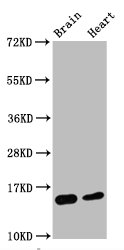
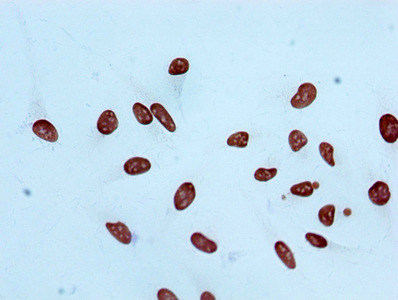
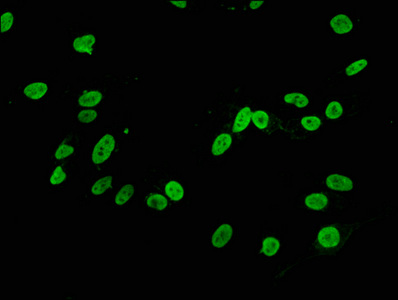
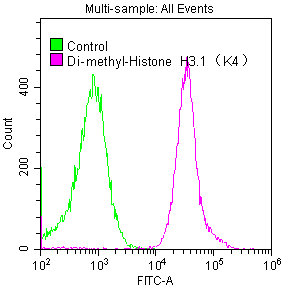
Extensive validation demonstrates this antibody's versatility across multiple experimental platforms. Western blot analysis of mouse brain and heart tissues reveals clean detection at the expected 15 kDa band, confirming specificity for the histone H3 target. The antibody performs reliably in immunocytochemistry and immunofluorescence applications using HeLa cells, where nuclear localization patterns consistent with histone staining have been confirmed. Flow cytometry validation in HeLa cells further expands its utility for quantitative single-cell epigenetic analysis, offering researchers flexibility in experimental design.
With confirmed cross-species reactivity in human and mouse samples, this antibody supports comparative studies across model systems. The unconjugated format allows pairing with detection systems of choice, accommodating diverse experimental workflows.
For researchers investigating chromatin dynamics, transcriptional regulation, or epigenetic alterations in disease contexts, this H3K4me2 antibody delivers the specificity and reproducibility essential for generating publication-quality data in nuclear signaling and epigenetics research.
There are currently no reviews for this product.





